
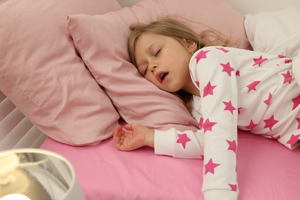
When most people think of sleep apnea, they picture an older adult snoring and having to endure countless nights of disrupted rest. However, the truth is that, while sleep apnea is a common condition among adults, it also impacts a small percentage of children. Read on to learn more about what sleep apnea looks like in kids, what can cause it, and how a pediatric dentist may be able to help.
Symptoms of Sleep Apnea in Children
According to the National Heart, Lung, and Blood Institute, sleep apnea is most common between the ages of two and eight years old in children. While some of the symptoms that you might see in adults can also affect children, others may be completely different, so it is a good idea to be familiar with them. If your child has sleep apnea, you may notice the following:
- Behavioral concerns, such as overactivity and aggression
- Difficulty paying attention in school
- Dry mouth or headaches when they wake up
- Daytime fatigue or sleepiness
During the night while they’re asleep, you may also notice:
- Chronic snoring
- Mouth breathing
- Intermittent cessation of breathing
- Bedwetting
- Waking up throughout the night
What Causes Sleep Apnea in Children?
While there is no single cause of sleep apnea in kids, there are multiple factors that can increase your child’s risk of this condition, including:
- Enlarged tonsils or adenoids
- Premature birth
- Cleft palate
- Dental malocclusions (i.e. teeth crowding, high palate, narrow jaw, tongue tie)
- Neuromuscular disorders
- Down syndrome
Routine screenings by your child’s healthcare professionals, like their pediatric dentist in Leesburg, can help spot and assess your child for sleep apnea starting at a young age, minimizing the health concerns that it can pose to them.
How Can Sleep Apnea Impact Your Child’s Health?
Just like in adults, a lack of deep sleep in children can impact so many areas of their life and even their development. Untreated sleep apnea in children can lead to forgetfulness and memory issues, which can impact their performance in school. It can also increase their risk of medical concerns such as high blood pressure, heart failure, pulmonary hypertension, and impaired growth.
The good news is that a knowledgeable professional can help you keep an eye on your child’s risk factors and assess their airway as they grow. This means that there will be a much higher likelihood of catching the problem early on so they can receive treatment in a timely manner.
How Can Sleep Apnea Be Treated in Children?
In order to confirm sleep apnea, your child must first undergo a sleep study. These overnight studies help determine if and what type of sleep apnea may be present, as well as how serious it is. Depending on the cause of your child’s sleep apnea, different treatment interventions, such as surgery to remove enlarged tonsils and adenoids, a CPAP machine, oral appliances, orthodontic treatment, or exercises called oromyofunctional therapy may be recommended.
In many cases, your child’s first assessment for sleep apnea is their pediatric dentist, who will screen them for airway concerns starting at a young age during their routine dental visits. As experts in the development of the face, mouth, and airway, pediatric dentists are familiar with the causes and impacts of the condition. They also work with a large network of specialists that can diagnose and provide treatment for the condition, leading to a more seamless process.
About the Author
Dr. Vani Takiar is a Board-Certified pediatric dentist that builds trust with both her patients and parents by removing the fear of the unknown. Partnered with a network of children’s sleep experts in Leesburg, she is able to help you navigate your child’s sleep apnea with confidence and ease. To learn more about sleep apnea in children, visit Tooth Clues’ website or call 571-799-0559.