
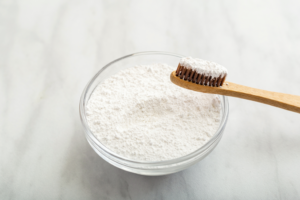
Although toothpaste powder may seem like a modern invention, it is not! The 18th and 19th century was the age of tooth powder, but it fell out of style once Colgate brought tubed toothpaste onto the scene in the late 1800s. So, why did tooth powder disappear for a while, and most importantly, why is it reemerging now? Read on to learn more about the history of toothpaste and whether to favor paste over powder in the 21st century.
What is the Story Behind Tooth Powder?
In the 1700s, tooth powder was incredibly popular. The original powder recipe was a modern-day dentists’ nightmare, containing sugar, brick dust, crushed pottery, and even acidic substances that destroyed tooth enamel! However, by the late 1700s, dentists weighed in, creating calcium carbonate-based tooth powders, which remains a key ingredient of the toothpaste that you buy today.
Tooth powder was largely sold in wide-mouthed jars and small boxes, and people would apply it by rubbing it on their teeth with either their fingers or a cloth. However, today, tooth powder looks a lot different. Coming back onto shelves as a common non-fluoride alternative, these toothpaste powders typically contain enamel-strengthening hydroxyapatite as well as clay and essential oils to help clean teeth and freshen breath.
What are the Pros & Cons of Toothpaste vs. Powder
When determining whether to switch your family over to tooth powder from toothpaste, you may want to weigh the pros and cons:
Tooth Powder
- It can be made at home, and a small study shows that it can be effective at controlling plaque build-up and preventing gingivitis, depending on its ingredients.
- One container can last up to three months.
- It may be too abrasive for teeth, depending on the ingredients it includes.
- It can be messy to use.
- No tooth powders have been awarded with the American Dental Association Seal of Acceptance at this time.
- It is produced by lesser-known manufacturers.
Toothpaste
- Easy to use and comes in fluoride as well as non-fluoride options with hydroxyapatite to strengthen enamel.
- Different options available depending on your needs, such as sensitivity toothpaste and whitening toothpaste.
- Clinically shown to be effective at preventing cavities (when containing fluoride).
- Many have received the American Dental Association Seal of Approval.
How to Choose the Right Option for Your Family
You get the final say of what type of toothpaste is best for you and your family. It can be helpful to get feedback and insight from professionals when making this decision, such as your child’s pediatric dentist in Leesburg. Although tooth powder has been around for centuries, it is not as popular today for a number of reasons.
While both options have benefits for your oral health, you may have more question marks surrounding tooth powder products. Taking the time to get those questions answered by a knowledgeable clinical professional can help you feel confident in whatever decision you move forward with!
About the Author
Dr. Takiar, better known as Agent T by her patients, is a Board-Certified pediatric dentist who takes an education-focused, hands-on approach to care. She is always happy to answer parents’ questions and wants to help you feel comfortable and confident in your child’s oral hygiene routine. Whether you want to explore fluoride-free toothpaste options like tooth powder, or you are simply interested in knowing more about what is on the shelves, you can count on Dr. Takiar to give you helpful insight. To schedule an appointment for your child, you can visit Tooth Clues’ website or call 571-799-0559.