
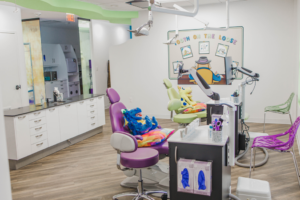
The key to maintaining a healthy smile for life for every child is having empowering and educational visits with their pediatric dentist in Leesburg. Gentle care from a team that understands that every young patient is unique in their own way can put both you and your child’s worries to rest. Some children may have environmental sensitivities or strong responses to the dental office, while others may have physical disabilities, and these individual qualities can have an impact on your child’s oral health, too. Read on to learn how, as a parent or guardian to a child with special needs, you can take proactive steps to keep your favorite smile healthy.
When Should Dental Care Start for Children with Special Needs?
The best time to start children’s dental care at home is when they are infants. Even when children do not have teeth, you can help control bacteria accumulation by wiping their gums after feeding, and once their first tooth appears, begin brushing and flossing gently at home. Building these habits at a young age can help make them feel more comfortable and like a natural part of your child’s routine.
Once your child’s first tooth appears, and surely by the age of one, begin taking them to their pediatric dentist for routine checkups and cleanings. If your child has developmental or physical disabilities, they can curate your child’s visit to be as comfortable as possible, allowing them to feel right at home the next time they visit.
Unique Oral Health Challenges for Special Needs
Children with special needs can experience a wide spectrum of barriers when it comes to dental visits and maintaining good oral health. For example, children with limited mobility may not be able to brush their teeth at home comfortably, putting them at a higher risk of cavities. Additionally, those with central nervous system disorders, like cerebral palsy, are more likely to experience extensive calculus (which is hardened plaque) and acid reflux that can lead to enamel erosion. Children with other health challenges, such as uncontrolled body movements, may find routine checkups and cleanings uncomfortable.
Your child’s pediatric dentist will be able to curate their care to fit their individual needs, ensuring that all of their barriers to care, allergies, and sensitivities are taken into account at each visit. By building a tailored routine, both you and your child will feel right at home at the dental office, viewing it as a fun outing instead of an errand. These specialists have completed additional advanced academic and clinical training tailored to special needs patients, so they truly know what they are doing. This allows you to relax knowing that your child is receiving top-tier care.
About the Author
Dr. Vani Takiar, better known as Agent T to her patients, is an experienced, Board-Certified pediatric dentist. Following dental school, she completed her Certificate in Advanced Graduate Studies in pediatric dentistry and is a Diplomate of the American Board of Pediatric Dentistry. She utilizes the latest technology and techniques, like a soft tissue dental laser, to make treatment as comfortable, precise, and positive for patients with special needs. For more information or to schedule an appointment, visit Tooth Clues’ website or call 571-799-0559.